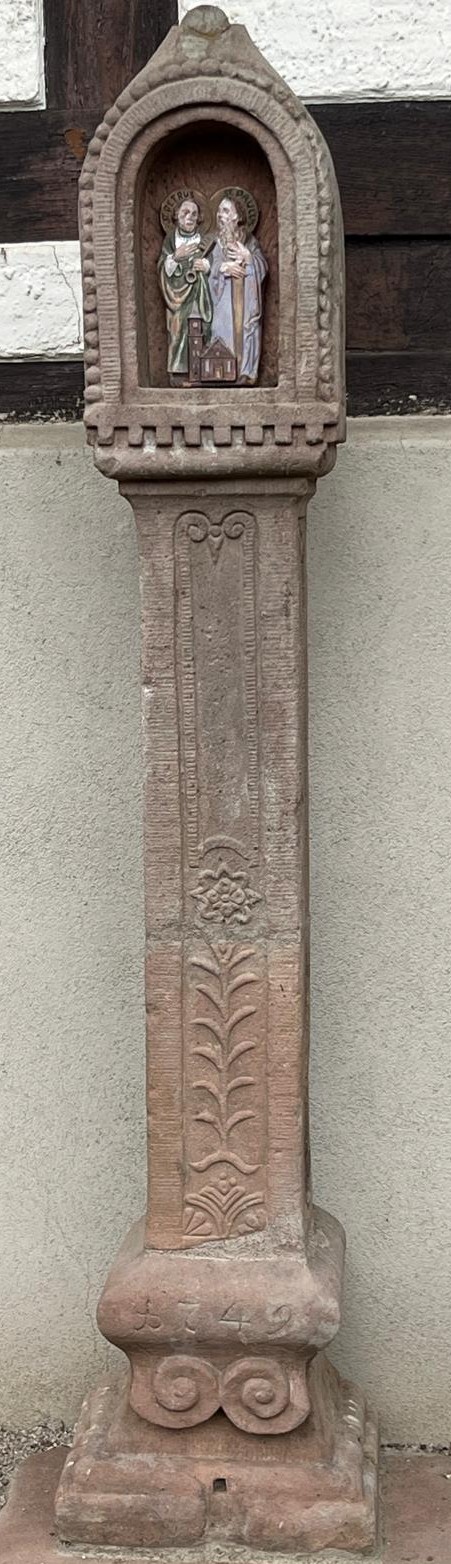
310 Wayside shrine 1749

A wayside shrine comes from the old German “Stock”, something that towers upwards, a small religious monument as a pillar made of wood or stone, usually standing along paths and decorated with a devotional picture, a figure of a saint or the crucified Christ in the niche. The wayside shrine is a symbol of popular piety. The reason for erecting them is often gratitude to God for dangers or epidemics that have been overcome, the memory of a dear and good person or an accident.

In the Durbach Valley from Ebersweier to Gebirg, there are over 150 small monuments that bear witness to the original piety and tradition of the local population. Most of these monuments are still looked after by their owners or local residents, decorated with flowers and are a welcome sight for many hikers in our beautiful landscape.

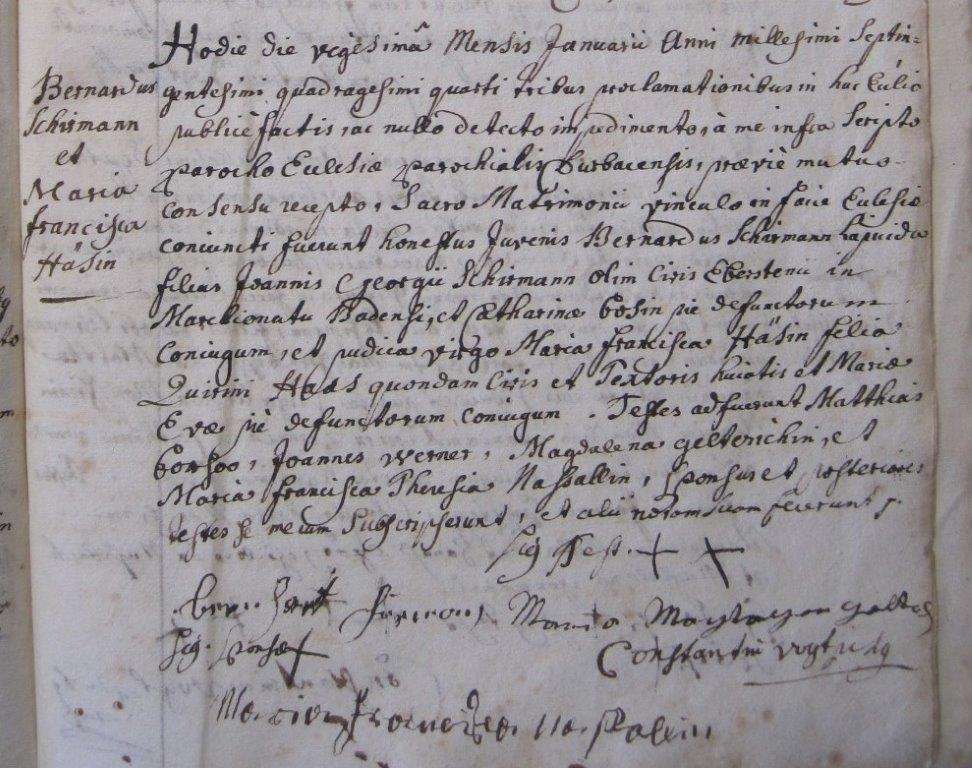
The wayside shrine in the wine and local history museum is probably the oldest small monument of its kind in our valley. Research into the origins of this wayside shrine revealed a long journey that can be traced in old documents, the land register, church registers and also in the memories of older citizens.
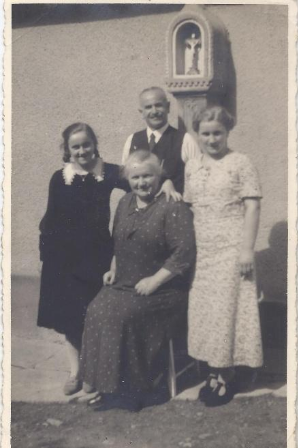
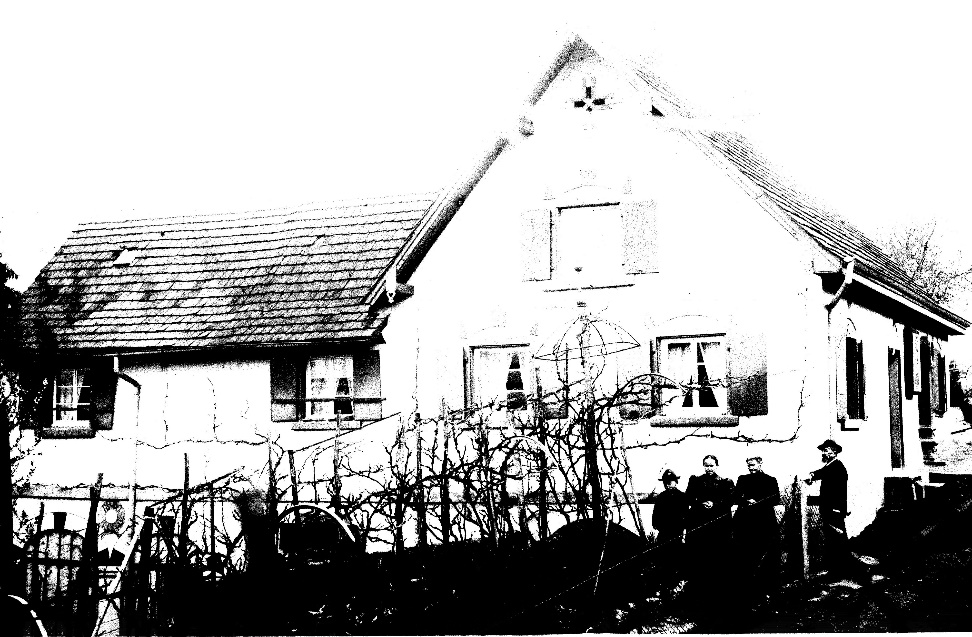
A family picture of the Karl Lang family in Steingasse around 1910, another picture around 1938, shows this wayside shrine to the right of the front door. The Lang family owned the property (register number 17) from 1872 to 1962
When the property was sold to the (refugee) Lobien family, the wayside shrine was probably no longer quite stable, which is why the new owners gave it to a sculptor in Offenburg.
The avid collector of antiques and local history expert Albert Hurst (later a board member of our museum) acquired the wayside shrine to place it as an ornament in the garden of his newly built house in Ruländerstraße. (Gabi Hurst, née Noll, was a neighbor in Steingasse and therefore had a connection to this memorial)
During the “lifting” or “excavation” of the wayside shrine, it became apparent that Albert Hurst had used an extremely stable concrete foundation. It therefore took a great deal of effort and several hours of work to uncover the plinth with the date 1749. The wayside shrine was probably already broken into three parts in 1962. In the Hurst family’s garden, the wayside shrine was only joined together in two parts, while the centerpiece was located directly behind the monument.
The sculptor Armin Heitz from Ebersweier was commissioned to professionally restore and recreate the monument and has now reassembled the three parts into a single whole.